
En esta noticia
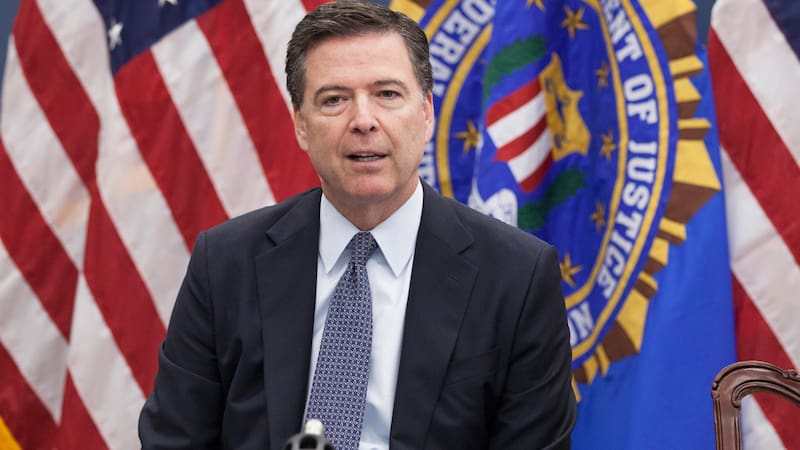
Former FBI Director James Comey is facing a third criminal prosecution attempt under President Donald Trump’s administration. The latest case centers on allegations that he directed FBI staff to disclose sensitive government information to a journalist nearly a decade ago.
The U.S. Department of Justice filed a criminal information against Comey in federal court in Washington, D.C., on October 5, 2026. The document was unsealed on October 26 at the request of Comey’s lawyers, bringing the allegations into public view.
Prosecutors accuse Comey of transmitting national defense information and conspiring to transmit it to a reporter from The New York Times in October 2016, when he was still leading the FBI.

Comey has denied the allegations. His attorney, Patrick Fitzgerald, said the filing accuses his client of crimes he did not commit and argued that the case is legally improper.
What the new charges against James Comey allege
The case concerns information disclosed in connection with a New York Times article published on October 5, 2016, about Yahoo and U.S. government email surveillance.
According to prosecutors, Comey directed FBI staff to speak with a reporter about the accuracy of an earlier Reuters report concerning whether Yahoo had developed a system to scan incoming emails for information provided by U.S. intelligence officials.
The government alleges that the information subsequently shared with the journalist included classified national defense information that should not have been disclosed.
The two-count filing accuses Comey of unlawfully transmitting that information and conspiring with others to do so. These remain allegations, not findings of guilt.
The disclosure issue had previously been investigated by federal authorities. Comey’s lawyers have argued that earlier investigations ended without criminal charges, making the new effort to prosecute him legally questionable.
Why Comey’s lawyers are challenging the case
One of the central disputes involves the statute of limitations, the legal deadline for bringing criminal charges.
The alleged conduct dates to October 2016. The Justice Department filed the criminal information on October 5, 2026, as the 10-year period was expiring. Prosecutors maintain that filing the document preserves the government’s ability to pursue the case.
Comey’s lawyers dispute that interpretation. They argue that the applicable law required a grand jury indictment within the 10-year period and that the criminal information filed by prosecutors does not satisfy that requirement.
A criminal information is a charging document submitted by prosecutors. Unlike an indictment, it does not result from a grand jury’s vote. The distinction is at the center of the defense’s effort to have the latest case dismissed.
The Justice Department has defended the procedure, describing the use of a criminal information to pause the statute of limitations as a recognized practice in federal court. The department has declined to comment further on the ongoing investigation.
The other criminal cases involving the former FBI director
The latest case follows two previous criminal proceedings involving Comey since Trump returned to the White House in 2025.
The first case accused Comey of making false statements to Congress about media leaks. A federal judge dismissed it after determining that the prosecutor who brought the charges had been unlawfully appointed.
A separate case remains pending and involves allegations that Comey threatened Trump through an Instagram post featuring seashells arranged to display the numbers “86 47.” Comey has sought to have that case dismissed as well.
The new allegations concern a different matter: the alleged disclosure of national defense information in 2016.

What Trump and Comey have said
Trump and Comey have had a strained relationship since the president fired him as FBI director in May 2017, while the FBI was investigating possible links between Russia and Trump’s 2016 presidential campaign.
Asked about the latest case on October 26, Trump called Comey a “dirty cop” but also said he did not know much about the matter.
Comey responded in a video statement posted on Instagram, saying the government was pursuing him again and reaffirming his innocence. He described the latest action as an abuse of the Justice Department and said he continued to believe in an independent federal judiciary.