

En esta noticia
Daylight Saving Time comes to an end in much of the United States in the coming days, which forces clocks to be set back one hour and at the same time marks the return to standard time, popularly known as “winter time.”
The adjustment is not uniform across the country: there is one state and several territories where the time does not change.

The time changes across the country: the day and time when clocks must be adjusted
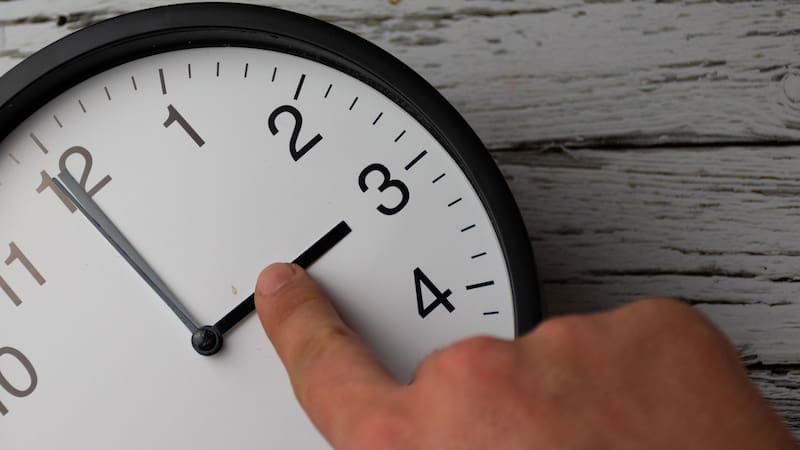
Daylight Saving Time ends on Sunday, November 1, 2026 at 2:00 a.m., local time. At that moment, the clocks are set back one hour and return to 1:00.
In practice, you “gain” one hour of sleep that night. The change is designed to take place in the early morning, when most people are asleep, so as to alter daily life as little as possible.
Most phones, computers and smartwatches automatically adjust the time if the automatic date and time setting is enabled; wall clocks, oven clocks or car clocks usually require manual adjustment.
Which states do not change their clocks?
Not all of the United States changes the time. They remain on standard time year-round, without making the change:
- Hawaii, which keeps Hawaii-Aleutian standard time throughout the year.
- Arizona, with one internal exception: the Navajo Nation, in the northeast of the state, does observe Daylight Saving Time.
This is possible because, although the time change is regulated at the federal level by the Uniform Time Act of 1966 (Uniform Time Act), each state has the authority to be exempt through its own legislation and remain on standard time at all times.

Until when standard time applies
Standard time will remain in effect during the fall and winter. The next change will be in spring 2027: on Sunday, March 14, 2027 at 2:00, the clocks will move forward one hour again (they will jump directly to 3:00), and Daylight Saving Time will begin once more.