
En esta noticia
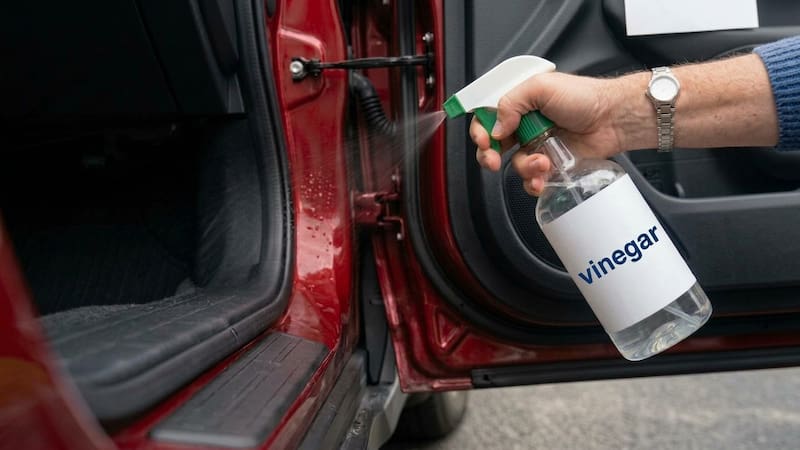
Spraying white vinegar on car doors is one of the home tricks circulating to keep the vehicle clean without spending too much. This product contains acetic acid and can help remove certain stains and residues, although its effectiveness depends on the material it is applied to.
The recommendation mainly targets the frames, entry areas, and other sections where dirt accumulates.

What spraying white vinegar on car doors is for
These are some of the cleaning uses that white vinegar can have, as long as it is used on compatible surfaces:
- Removing water stains and mineral deposits: diluted vinegar can help loosen the marks left by hard water. To avoid damage, you must check that the finish can tolerate this product and rinse it after use.
- Making it easier to clean glass and mirrors: on compatible glass surfaces, a diluted solution can help remove some marks and residues. It should not be applied to screens or to surfaces with special coatings without checking the manufacturer’s instructions.
- Loosening insect remains and organic dirt: vinegar can help dislodge some adhered residues.
Kelley Blue Book, a media outlet specialized in cars, mentions these uses of white vinegar for specific cleaning tasks. It also warns that it can damage protective wax and affect certain finishes, trim, and coatings if applied improperly.
Does white vinegar work to keep insects away from the car?
One of the explanations circulating on the internet is that the strong smell of vinegar helps prevent ants and spiders from sheltering in the door cracks.
In any case, if ants or other insects appear inside, the most advisable thing is to remove food remnants, clean the affected areas, and check for possible entry points.
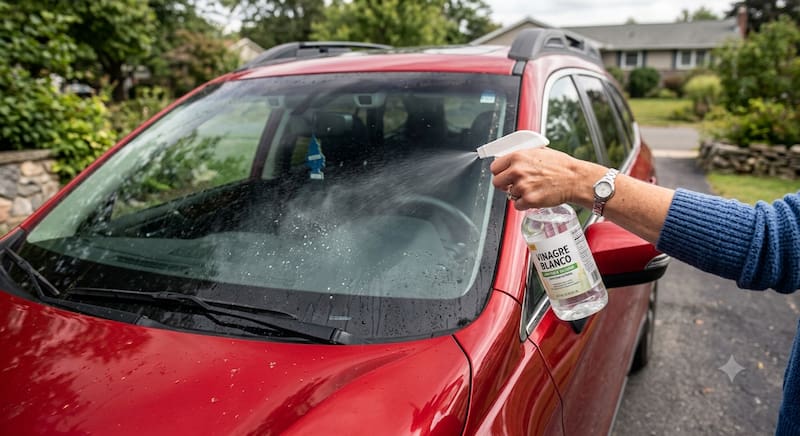
How they recommend applying vinegar to the car
Before applying this product, it is important to identify the material of the surface. Cleaning glass is not the same as treating paint, a trim piece, or a rubber seal.
To reduce the risks, it is advisable to follow these recommendations:
- Dilute the product: for certain exterior cleaning tasks, Kelley Blue Book recommends mixing equal parts white vinegar and distilled water.
- Test first in an inconspicuous area: this way you can check whether the surface shows any reaction.
- Use a microfiber cloth: this allows cleaning without resorting to abrasive sponges that could scratch the finishes.
- Rinse after application: the vinegar should not be allowed to dry on the paint.
- Avoid delicate materials: it is not recommended to apply it without checking its compatibility.