
En esta noticia
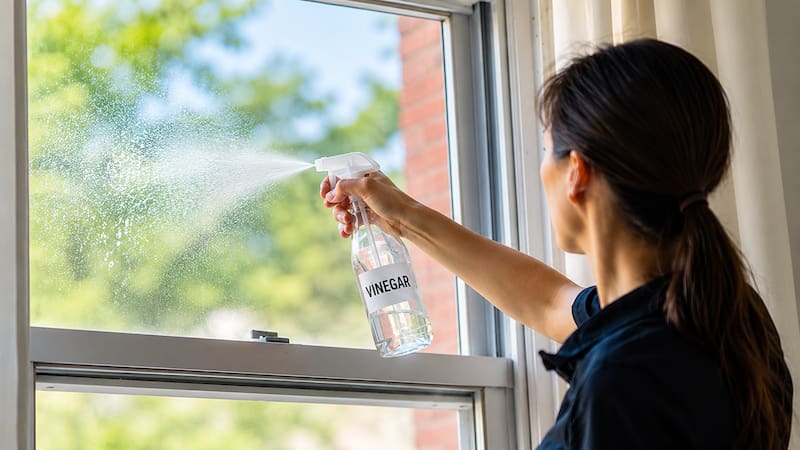
Among the most classic cleaning tricks is spraying white vinegar on windows to leave the glass clean and clear. It’s not just a handed-down habit: it has a specific chemical explanation and solves the most annoying problem when cleaning glass, which is ending up with streaks or a cloudy film.
What spraying vinegar on windows is for
Vinegar helps clean glass and leave it streak-free and film-free. It works on grease, smoke, stuck-on dust and water stains or mineral buildup that collect on windows, both inside and out. The result is clearer, shinier glass, without that cloudy layer that often remains when you clean with water alone.
Vinegar contains acetic acid, a mild acid that dissolves grease, the oily film left by pollution and mineral deposits (the limescale or white marks left by hard water). Those residues are precisely what water alone can’t remove and what cause glass to look cloudy or streaked.
It also evaporates quickly and leaves no residue. Many streaks on glass don’t come from dirt, but from the film left behind by some cleaners as they dry. Because it evaporates cleanly, vinegar doesn’t leave that layer, which is why the glass stays clear.

How to apply it correctly
The process is simple, but doing it right makes all the difference:
- Make the mix: the usual method is to dilute white vinegar with water in equal parts, half and half, in a spray bottle.
- Spray it on the glass and, if there is stuck-on dirt, let it sit for a few seconds.
- Wipe with a microfiber cloth, a squeegee or crumpled newspaper, which doesn’t leave lint and helps keep streaks away.
- Dry thoroughly, going over the edges, where moisture usually collects.