En esta noticia
The sky will turn dark in the middle of the day during one of the most anticipated astronomical events of the next decade. On August 2, 2027, a total solar eclipse will cross parts of Europe, North Africa, and the Middle East, offering millions of people the chance to witness one of nature’s most spectacular phenomena.
Known as the “eclipse of the century,” the event will stand out for the exceptional length of its totality. In the best-positioned locations, the Moon will completely cover the Sun for more than six minutes, creating a rare opportunity for skywatchers and astrophotographers.

When is the 2027 total solar eclipse?
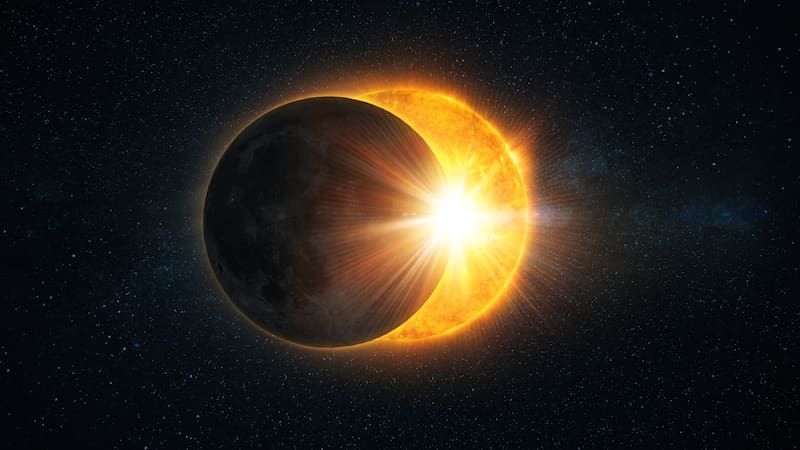
The 2027 total solar eclipse will take place on Monday, August 2. During the event, the Moon will pass directly between the Earth and the Sun, temporarily blocking the Sun’s visible disk.
The eclipse’s path of totality will extend from southern Spain across North Africa and into the Middle East. The duration will depend on the observer’s location, meaning some destinations will experience a much longer period of darkness than others.
At the point of maximum totality, the eclipse will last approximately 6 minutes and 22 seconds. This makes it one of the longest total solar eclipses of the 21st century and a major attraction for travelers planning an astronomical adventure.
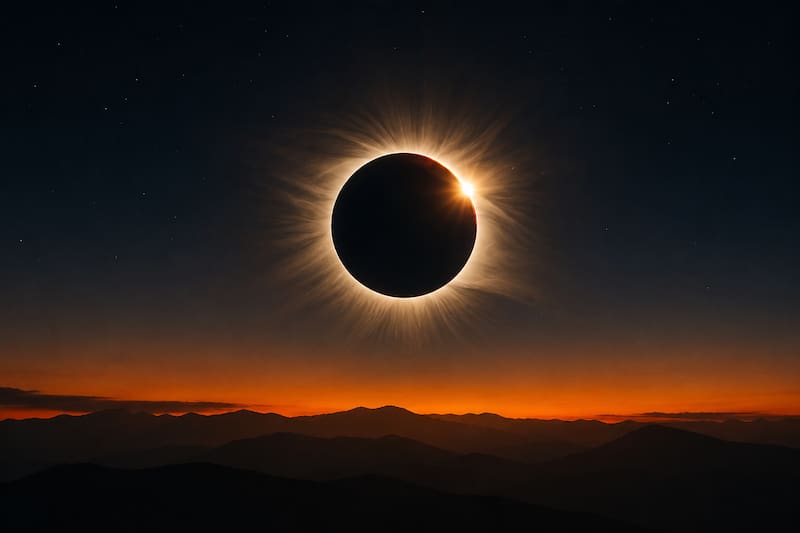
Unlike a partial eclipse, a total solar eclipse allows observers within the path of totality to see the Sun’s corona, the outer atmosphere that becomes visible when the bright solar disk is completely covered.
Where to watch the eclipse of the century
Travelers will have several opportunities to observe the eclipse across southern Europe, Africa, and the Middle East. The best destination will depend on how long they want to experience totality, the weather conditions, and the type of landscape they hope to photograph.
Spain: Tarifa, Cádiz, and Málaga
Southern Spain will be one of the most accessible locations for visitors traveling from Europe. The region combines transportation infrastructure, hotels, beaches, and historic cities with the opportunity to see the eclipse.
Some of the most notable destinations include:
- Tarifa: The town could experience approximately 4 minutes and 40 seconds of totality. Its location near the Strait of Gibraltar makes it one of the most attractive viewing spots in Spain.
- Cádiz: The city may experience around 2 minutes and 56 seconds of totality. Its coastal setting offers opportunities for photographs featuring the eclipse over the Mediterranean landscape.
- Málaga: The total eclipse will last approximately 1 minute and 54 seconds. The city’s airport, hotels, and tourist infrastructure make it a practical option for visitors.
Tarifa is particularly interesting for photographers who want a longer period of darkness without traveling as far as North Africa.
Morocco: Tánger, Tétouan, and Chefchaouen
Morocco will also fall within the eclipse’s path. The country offers a combination of coastal cities, mountain scenery, and historic architecture that could provide distinctive settings for observing the sky.
Tánger and Tétouan will each experience close to five minutes of totality. Their proximity to the Strait of Gibraltar and the Rif Mountains makes them appealing choices for visitors seeking a mix of astronomical observation and sightseeing.
Meanwhile, Chefchaouen, famous for its blue-painted buildings, will experience approximately 3 minutes and 39 seconds of totality. Its mountain setting could provide a memorable backdrop for eclipse photography.
Algeria: One of the longest viewing opportunities
Algeria will offer several locations with extended periods of totality. The country’s coastal and inland landscapes could appeal to travelers who want to combine the eclipse with a less conventional destination.
Oran will experience approximately 5 minutes and 9 seconds of totality. The coastal city, known for the Santa Cruz fortress and its Mediterranean views, could be a strong option for visitors looking for urban infrastructure.
Other locations include:
- Mostaganem: Approximately 5 minutes and 7 seconds of totality.
- M’Sila: Approximately 5 minutes and 22 seconds of totality.
The inland regions may also offer interesting landscapes for photographers, particularly those seeking desert scenery and wide-open skies.
Tunisia: Desert landscapes and Mediterranean views
Tunisia will provide several different settings for the 2027 solar eclipse. Visitors can choose between desert environments in the south and coastal locations along the Mediterranean.
Tozeur will experience approximately 1 minute and 43 seconds of totality. The region is known for its desert landscapes and locations associated with the Star Wars films.
At Sidi Bouhlel, also known as Star Wars Canyon, totality could last around 3 minutes and 9 seconds.
Sfax will offer one of the longest viewing opportunities in the country, with approximately 5 minutes and 41 seconds of totality. Its urban infrastructure and Mediterranean setting make it another destination worth considering.
Egypt will be the main destination for the solar eclipse
For many eclipse chasers, Luxor, Egypt, will be the ultimate destination. The city is located near the area where totality will reach its maximum duration, making it one of the most anticipated viewing locations in the world.
The opportunity to witness the eclipse alongside ancient Egyptian temples adds another dimension to the event. However, visitors should consider more than just the length of totality when planning their trip.
Luxor: The longest totality
Luxor will experience approximately 6 minutes and 22 seconds of totality, the maximum duration highlighted in the eclipse guide.
The city’s archaeological sites, including the temples of Karnak and the Valley of the Kings, could offer spectacular settings for photographs. However, access to specific monuments may be restricted during the event, and the large number of visitors expected could make planning essential.
Another important factor is the position of the Sun. In Luxor, it will be approximately 82 degrees above the horizon during totality, meaning the Sun will be almost directly overhead.
This is particularly relevant for photographers hoping to capture the eclipse above an ancient temple. The high solar elevation will require careful planning of the camera angle and composition.
Other Egyptian destinations to consider
Travelers who want to avoid the crowds in Luxor can consider other locations along the eclipse’s path.
- Edfu: Approximately 5 minutes and 40 seconds of totality, with the famous Temple of Horus nearby.
- Siwa Oasis: Around 5 minutes and 31 seconds of totality, offering desert landscapes, palm groves, and salt lakes.
- Esna: Another location in the Nile Valley that could provide access to ancient Egyptian landmarks.
- Kom Ombo: A possible alternative for visitors looking for a different setting along the eclipse route.
Egypt’s desert environments may also provide wide horizons and fewer obstacles for photographers, although weather and travel conditions should be evaluated before choosing a final location.
How to prepare for the 2027 solar eclipse
Choosing the right destination is only part of the preparation. The weather, the position of the Sun, accessibility, and the local landscape can all influence the experience.
A location with the longest totality is not necessarily the best choice for every traveler. Some visitors may prefer a destination with easier transportation, while photographers may prioritize clear skies and a memorable foreground.
The eclipse guide recommends researching the path of totality and visiting potential viewing locations ahead of time whenever possible. This allows photographers to plan their compositions and understand how the Sun will appear in relation to the landscape.

Tips for photographing the eclipse
The total phase will be brief, even in locations where it lasts more than six minutes. Preparing the camera and practicing before the event can help photographers make the most of the available time.
Important considerations include:
- Choose a location inside the path of totality.
- Research the Sun’s position and the surrounding landscape.
- Test the camera, lenses, and tripod before eclipse day.
- Protect equipment from extreme heat, particularly in Egypt.
- Prepare an alternative location in case clouds affect visibility.
Photographers should also remember that the eclipse is not only about capturing a close-up of the Sun. The changing light, the surrounding landscape, and the reactions of other observers can all become part of a memorable image.