
En esta noticia
The National Aeronautics and Space Administration (NASA) confirmed that it would already be working on the installation of a lunar base. According to the agency, in the near future fleets of landers, rovers, and drones will head to the Moon.
The agency confirmed this after describing the first phase of the “Lunar Base” initiative. The goal is much more than sending humans to the moon: it is to establish a permanent human presence on the celestial body. At the same time, NASA’s interest in sending astronauts on a mission to Mars is also growing.
NASA finally confirmed it: What is the “Lunar Base” initiative like?
NASA is moving ahead with one of the most ambitious projects in the history of modern space exploration. It involves installing a permanent base on the Moon as part of the Artemis program.
More than just sending humans to the Moon, this is a plan to establish a sustained human presence at the Moon’s South Pole and use that infrastructure as a platform for possible missions to Mars.
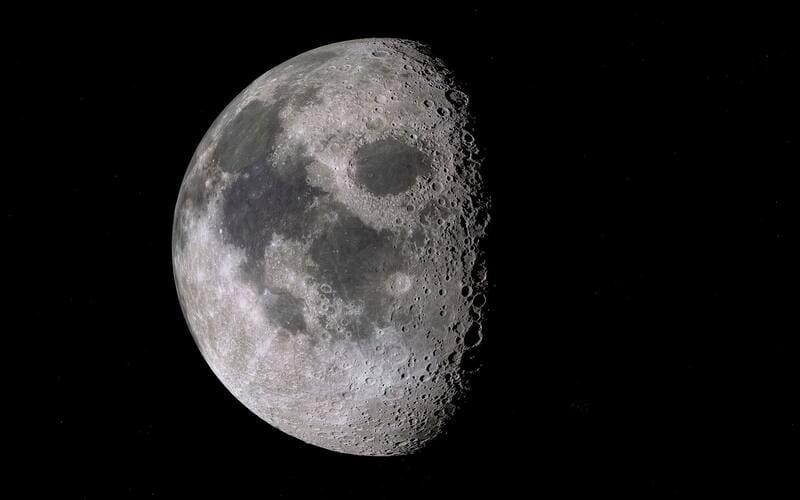
The development of a network of habitats, vehicles, drones, power systems, and science stations is being considered that will be capable of operating semi-permanently on the lunar surface.
According to the plans presented by NASA, this base would be installed near a region that contains water ice deposits and has greater solar exposure than others.
The latest expeditions: What were the results?
The recent Artemis missions marked a turning point in America’s space strategy. Artemis II carried out the first crewed flight around the moon since the Apollo program, something that made it possible to validate navigation, life support, and deep-space operations systems.
At the same time, various robotic missions funded by NASA managed to land scientific equipment on the Moon’s surface to analyze the terrain and test technologies that will be used in future bases.
What is expected in the coming months?
The U.S. space agency confirmed that during 2026 it will begin a new stage with three key missions to prepare the future lunar base.
NASA has already awarded multimillion-dollar contracts to companies such as Blue Origin, Astrolab, Lunar Outpost, and Firefly Aerospace to develop lunar vehicles, exploration drones, and logistics systems for future human operations.