
En esta noticia
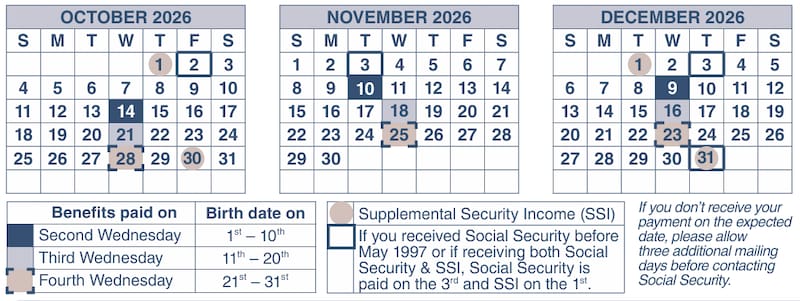
The Social Security Administration (SSA) established two payment dates for Supplemental Security Income (SSI) for October 2026: Thursday, October 1 and Friday, October 30. The second deposit corresponds to the November payment, which is advanced because the 1st falls on a Sunday.
SSI is a federal program that provides monthly payments to adults and children who have little or no income, few resources and who also meet the requirements related to disability, blindness or age. The amount each beneficiary receives depends on their financial and housing situation.

On what days is SSI paid in October 2026?
The SSA calendar includes two SSI deposits in October 2026:
- Thursday, October 1: payment for October.
- Friday, October 30: payment for November.
Who can receive the SSI payment?
The Supplemental Security Income is intended for people who meet three main conditions. The SSA says that both adults and children may be eligible if they have:
- Little or no income.
- Little or no resources.
- A disability, blindness, or are 65 years old or older.
Eligibility depends on how much money each person earns, their resources, their housing situation, and other circumstances.
In the case of people under 65, a disability must meet certain conditions. According to SSA, it must affect the ability to work for a year or more, cause death or, in the case of children, severely limit daily activities.
How much money does SSI pay in 2026?
The maximum monthly SSI payment in 2026 is USD994 for an individual and USD1,491 for a couple. However, not everyone receives that amount. The amount depends on the factors mentioned previously.
“Your monthly payment depends on your income, your living situation, the things you own and other factors”, the agency explains.

What should be reported if I receive SSI?
The SSA states that beneficiaries must regularly report their wages, other income, resources and changes in their living situation.
The recommendation is to keep the information up to date in order to avoid receiving an incorrect amount. A change that is not reported can affect both the monthly payment and continued eligibility.