
En esta noticia
Millions of Americans rely on Supplemental Security Income (SSI) to help cover essential expenses, including housing, food and medical care. The Social Security Administration (SSA) schedules these federal benefits monthly, but payments can arrive earlier when the regular payment date falls on a weekend or federal holiday.
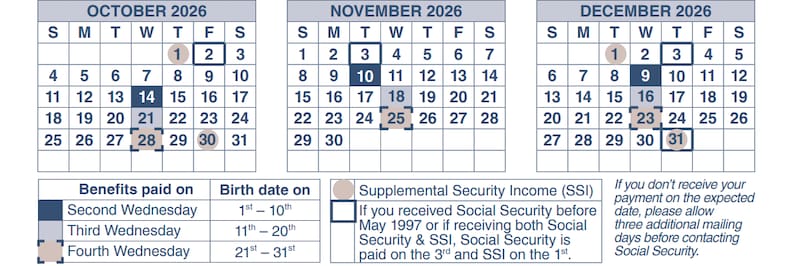
For November 2026, eligible recipients are scheduled to receive their SSI payment on Friday, October 30, rather than Sunday, November 1. The maximum federal monthly payment for an eligible individual is $994, under the benefit rates in effect for 2026.
The early deposit does not represent an additional benefit or a special bonus. It is the regular November payment issued ahead of schedule.

Who qualifies for the $994 SSI payment?
The SSI program provides financial assistance to people who meet specific age, disability or blindness requirements and have limited income and resources. According to the SSA, eligible applicants generally must fall into one of these categories:
- Adults aged 65 or older who meet the program’s financial requirements.
- People with a qualifying disability that meets the SSA’s definition.
- People who are blind under the agency’s eligibility rules.
- Children with qualifying disabilities whose households meet the applicable SSI income and resource requirements.
Applicants must also satisfy the program’s citizenship or eligible noncitizen requirements and generally reside in one of the 50 states, the District of Columbia or the Northern Mariana Islands.
Eligibility is not determined by age or disability alone. The SSA evaluates an applicant’s financial circumstances, including income and countable resources, before deciding whether they qualify for benefits.
How much will SSI recipients receive in November 2026?
The maximum federal SSI payment depends on the recipient’s eligibility category. For 2026, the SSA established the following monthly amounts:
| Eligible individual | $994 |
| Eligible couple | $1,491 |
| Essential person | $498 |
These figures are federal maximums, not guaranteed payments for every beneficiary. The SSA generally reduces an individual’s benefit when they have countable income. Certain states also provide supplemental payments that may increase the total amount received.
The federal SSI payment amounts increased by 2.8% in January 2026 following the annual cost-of-living adjustment, known as COLA.
Why is the November SSI payment arriving early?
SSI benefits are generally scheduled for the first day of each month. When that date falls on a Saturday, Sunday or federal holiday, the SSA typically issues the payment on the preceding business day.
Because November 1, 2026, falls on a Sunday, the agency’s calendar places the November SSI deposit on Friday, October 30.
Recipients should account for this calendar adjustment when planning their monthly budgets. Since the money arriving on October 30 is intended to cover November’s benefit period, the early deposit does not mean that an extra payment will be issued during November.
What are the income and resource limits for SSI?
To qualify, applicants must meet the SSA’s financial eligibility rules. In 2026, the general resource limits are $2,000 for an individual and $3,000 for a couple.
Countable resources can include money in bank accounts, cash, stocks and certain other assets. However, the SSA excludes some resources when determining eligibility, so not everything a person owns necessarily counts toward these limits.
Income rules also affect the benefit amount. The agency considers earnings from work and certain payments from other sources, including pensions and some Social Security benefits. Not all income is counted, and the amount considered may reduce the monthly SSI payment.
Recipients must report changes that could affect their eligibility or benefit amount, including changes in income, living arrangements or resources.

What should recipients do if their SSI payment does not arrive?
People who do not see the November payment on the scheduled date should first check their bank account or payment method and confirm the deposit date. If the payment remains missing, the SSA recommends allowing three additional business days before contacting the agency to report a missing payment.
Recipients can check their benefits and find official information through the Social Security Administration’s website at SSA.gov or contact the agency by phone at 1-800-772-1213.