
En esta noticia
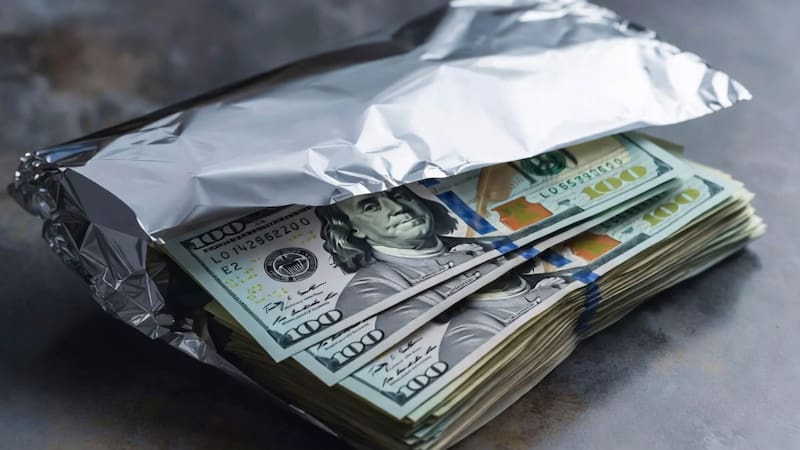
Wrapping bills in aluminum foil has become a homemade method that is increasingly used to protect cash savings. The technique aims to preserve the physical condition of higher-value bills against humidity, heat, and other factors that speed up their deterioration.
Paper money is a material sensitive to environmental conditions, so different conservation specialists recommend taking extra precautions when storing it for long periods. Wrapping bills is part of a set of simple measures that seek to avoid stains, deformations, and mold.
What is the purpose of wrapping bills in aluminum foil?
Aluminum foil acts as a barrier that reduces direct contact between the bill and ambient humidity. That is why people who save cash often use it as an extra layer before storing the money in boxes or drawers.
This technique does not replace proper storage or guarantee total protection, but it does help reduce the risk of deterioration when cash remains stored for a long time.
In addition to humidity, other factors damage bills stored at home:
- Excessive heat and sudden temperature changes.
- Rodents and insects, which can tear paper money.
- Contact with metal clips, coins, or jewelry, which causes oxidation.
- Rubber bands or PVC containers, which deteriorate the paper over time.
How can you better preserve bills stored at home?
For the method to be effective, it is advisable to combine it with other preservation practices. Wrapping the bill first in aluminum foil or white paper and then storing it in a dry place significantly reduces the risk of deterioration.

Wrapping bills in aluminum foil does not increase their value or protect them against inflation or the exchange rate: its function is exclusively physical. That is why specialists suggest adding other basic care measures:
- Use silica gel bags to absorb moisture.
- Replace clips and rubber bands with paper bands.
- Store bills in airtight PVC-free bags.
- Choose a dry, clean place with no direct sunlight.