
En esta noticia
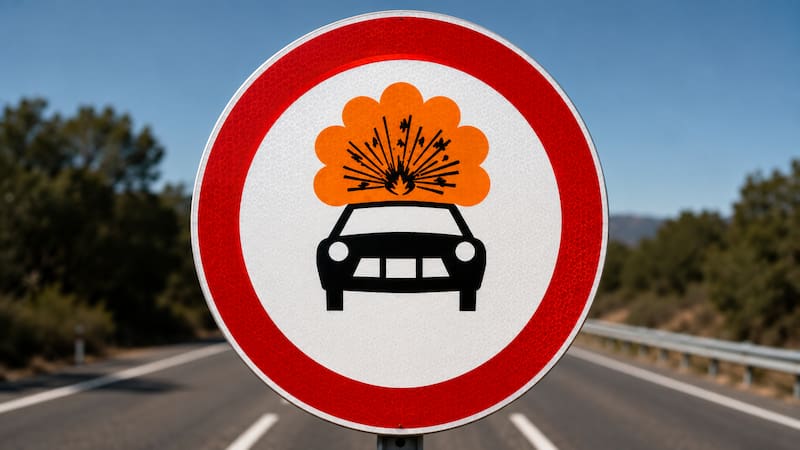
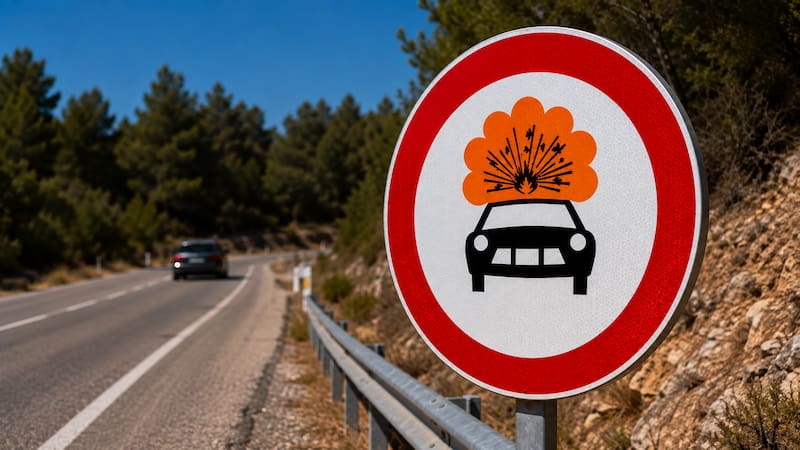
The circular traffic sign with a red border, which combines the silhouette of a car and an orange explosion symbol at the top, is part of the international road signage system. It is a prohibition directed at a specific type of vehicle: the one that transports hazardous goods.
This sign is defined by the Vienna Convention on Road Traffic, a 1968 United Nations treaty updated in 2006. It applies in Europe and much of Latin America.
What exactly does the circular sign with the car and the orange explosion mean?
The symbol indicates that passage is prohibited for vehicles intended for transporting hazardous goods, such as explosives, fuels, or flammable substances. The orange explosion figure represents precisely that type of cargo.
In several countries, the sign is accompanied by an additional plate that specifies which category of hazardous goods is restricted, according to local law. That information determines whether the prohibition applies to the entire stretch or only to certain loads.
Where is this sign usually placed?
Because of its function, this sign is installed in places where a hazardous load would represent a high risk:
- Tunnels and underpasses
- Bridges with load restrictions
- Urban centers and residential areas
- Near schools, hospitals, or areas with heavy pedestrian traffic
How does this sign affect drivers and what happens if it is ignored?
For a private driver, the sign does not imply any restriction, since it only applies to vehicles authorized to transport hazardous loads. Recognizing it is useful, however, for those taking a driving test or driving outside the United States, where this system is not used.
If a hazardous-goods carrier ignores the sign, they face fines, administrative penalties, and even suspension of their cargo license, depending on each country’s regulations. Noncompliance also increases the risk of accidents in areas not approved for that type of transport.