En esta noticia
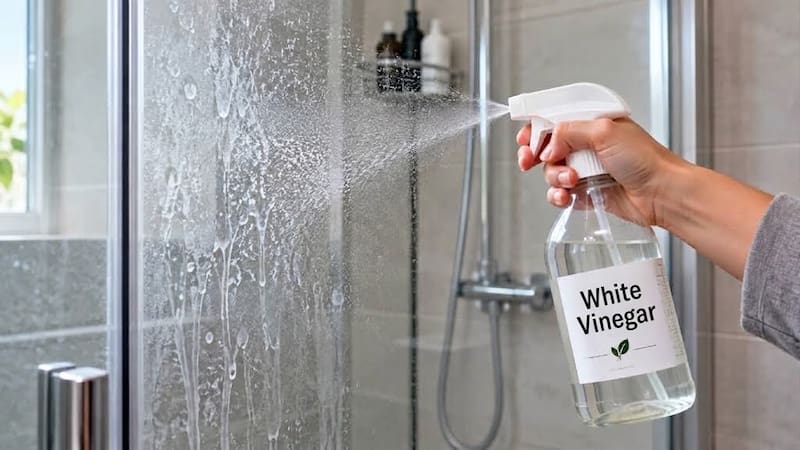
The white stains that appear on the shower screen are one of the hardest bathroom problems to remove. Even if the glass is cleaned frequently, water droplets can dry and leave mineral deposits that, over time, form an opaque film popularly known as limescale.
Among the most used homemade tricks is an inexpensive product that almost everyone has in the kitchen: white vinegar. Its acidity can help dissolve mineral deposits and soap residue stuck to the glass, making cleaning considerably easier.
What is it for
The main reason for using white vinegar on the shower screen is to combat the marks caused by hard water.
When water droplets remain on the glass and evaporate, minerals such as calcium and magnesium can remain. The gradual buildup creates those characteristic whitish stains that make a clean shower screen look permanently dirty.
Vinegar contains acetic acid, a substance that can react with certain mineral deposits and make them easier to remove.
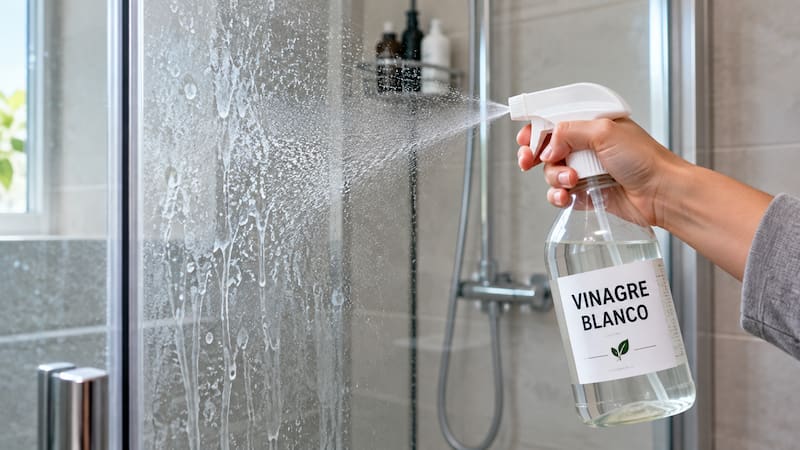
For this reason, spraying it on the glass can help soften limescale, remove water marks and loosen soap residue, restoring transparency to the shower screen without initially having to resort to harsher cleaning products.
Why everyone recommends it
The explanation lies in chemistry. Many deposits known as limescale contain mineral compounds that react to acids.
The acetic acid present in vinegar helps break down or dissolve part of those encrustations. Once the deposit softens, it is much easier to remove using a sponge or cloth.
That is why the trick can work especially well on recent hard water marks. In contrast, when the shower screen has been accumulating mineral deposits for months or years, a single application will probably not be enough and it may be necessary to repeat the process.