En esta noticia
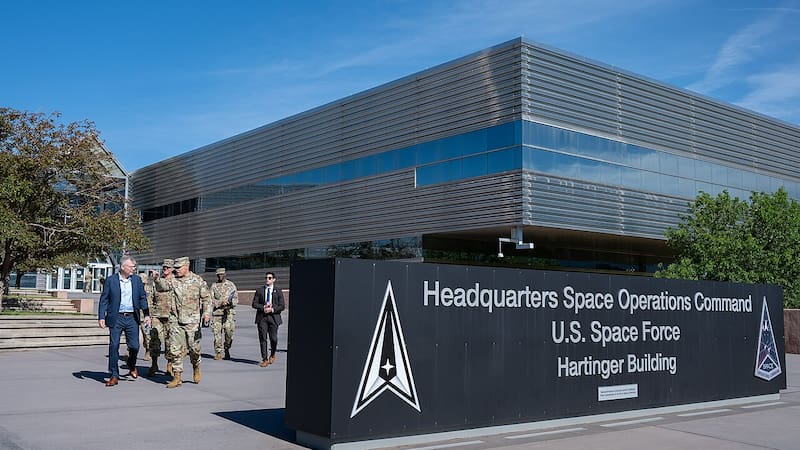
The announcement was made by senior U.S. military officials, who said the country needs new capabilities to protect its space-based assets and military operations against potential threats from rival powers.
However, authorities did not provide specific details about the weapons involved, their location or the way they operate. The confirmation therefore does not establish exactly which systems are currently deployed in orbit.

U.S. officials confirm the deployment of space weapons
U.S. Secretary of the Air Force Troy Meink said during a defense conference that the United States had deployed “counterspace weapons” in orbit.
These capabilities are designed to protect American military operations in space and respond to hostile actions against U.S. satellites and other space-based systems.
Officials from the United States Space Force also discussed the importance of protecting the country’s space infrastructure. The military relies heavily on satellites for communications, navigation, surveillance, missile warning systems and the transmission of strategic information.
The officials did not clarify whether the deployed systems involve electronic jamming, cyber tools, lasers, kinetic devices or other technologies. As a result, the public does not have enough information to determine the exact nature of the weapons.
The announcement reflects the growing importance of space in modern military planning. The United States, China and Russia have all developed capabilities that could interfere with or threaten satellites during a conflict.
Why the announcement is raising global concern
The disclosure has generated concern because an attack against satellites could affect both military operations and civilian services on Earth.
Satellites support a wide range of activities, including:
- Global communications.
- Navigation and positioning systems.
- Weather monitoring.
- Intelligence and surveillance.
- Missile detection.
- Military coordination.
- Emergency and disaster-response operations.
A conflict in space could therefore have consequences beyond the countries directly involved. Damage to satellites could disrupt communications, reduce access to navigation services and create additional risks for civilian infrastructure.

The announcement also raised questions about whether the deployment of these systems could encourage other countries to expand their own space-based weapons programs.
China responds to the U.S. announcement
China criticized the expansion of military capabilities in space and called for the protection of the peaceful use of outer space.
A spokesperson for the Chinese Foreign Ministry said that Beijing opposes the transformation of space into a battlefield and warned that the deployment of weapons could contribute to a new space arms race.
China has repeatedly called for stronger international rules governing military activities outside Earth. Beijing has also accused Washington of increasing tensions through its space-defense programs.
The Chinese government argues that the development of offensive space capabilities could undermine strategic stability and increase the possibility of an arms race between major powers.
At the same time, the United States has raised concerns about China’s own anti-satellite and counterspace capabilities. Washington considers those systems a potential threat to American satellites and military operations.
Russia also warns against militarizing space
Russia also responded to the U.S. confirmation by opposing the expansion of weapons in orbit.
Moscow has repeatedly argued that outer space should remain free from weapons and has criticized American plans to strengthen its military presence beyond Earth.
The United States, meanwhile, has accused Russia of developing space-based capabilities that could threaten satellites. Moscow has rejected some of those allegations and has also questioned Washington’s military space programs.
The disagreement is part of a broader strategic rivalry involving satellite protection, missile-warning systems, surveillance technology and the possibility of attacks against space infrastructure.
What international law says about weapons in space
The announcement also renewed attention to the Outer Space Treaty of 1967, one of the main international agreements governing activities in space.
The treaty prohibits placing nuclear weapons and other weapons of mass destruction in orbit or stationing them in outer space. It also bans the placement of such weapons on the Moon and other celestial bodies.
However, the agreement does not prohibit every type of conventional weapon or every military activity in space. This has created debate over the legal status of technologies such as electronic interference systems, cyber capabilities, lasers and other counterspace tools.
Because the United States did not disclose the exact systems involved, it is not possible to determine from the announcement alone whether the weapons fall into a specific legal category.
The lack of details has also made it difficult to assess whether the deployment is intended primarily for defense, deterrence or the potential disruption of another country’s satellites.