
En esta noticia
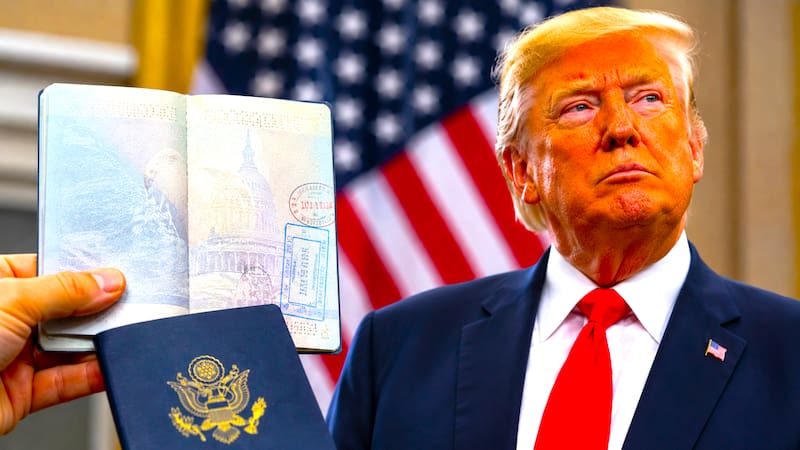
The White House announced new measures regarding birthright citizenship and the entry of foreigners into the United States, a decision that could affect thousands of people who were seeking to settle legally in the country or travel in order to obtain immigration benefits for their children.
According to the information released by the Government of Donald Trump, the new provisions were signed through two executive orders that seek to strengthen the established criteria on U.S. citizenship.
New rules for living legally in the United States: what changes with these measures?
The first executive order identifies categories of children of foreigners who, according to the interpretation adopted by the Administration after the Trump v. Barbara court ruling, would not have an automatic right to birthright citizenship.
The second order delegates authority to the State Department and the Department of Homeland Security to end the practice known as birth tourism.
“U.S. citizenship embodies a sacred bond between the American people and their Nation, and carries profound rights, privileges, and responsibilities,” the statement says.
What birth tourism is and the context in which this measure arrives
This term describes the trips taken by pregnant women who enter the United States with the goal of giving birth in the country.
Trump signed on January 20, 2025, the day of his inauguration for a second term, an executive order to deny automatic citizenship to some children born in the U.S. whose parents were migrants without legal status or with temporary presence.
The measure was blocked by courts after lawsuits from states and groups such as the American Civil Liberties Union (ACLU), which argued that Trump could not change by decree a right protected by the 14th Amendment.
The Supreme Court, on June 29, 2026, backed the protection of citizenship for those born in the country under the current interpretation of that provision.
At present, almost everyone born on U.S. territory obtains citizenship, regardless of their parents’ immigration status. The new order seeks to create exceptions for cases such as so-called “maternity tourism.”
What the Trump Administration says about the Supreme Court ruling
The text orders federal agencies not to recognize the citizenship of children born in the country when the mother is not legally in the United States and the father is neither a U.S. citizen nor a lawful permanent resident.
The White House maintains that the Supreme Court ruling allows these exceptions to be established because, according to its interpretation, the 14th Amendment does not cover people who are not “subject to the jurisdiction” of the United States.
The order also mentions as possible exceptions children of foreign government members, people considered foreign terrorists, and those born in unincorporated territories.
With information from EFE/Author: David Toro Escobar