En esta noticia
Clocks across much of the United States will change again in November 2026 as part of the annual daylight saving time calendar. The change will mark a return to standard time and will require millions of people to adjust their clocks during the early hours of the morning.
The date set for the change will be Sunday, November 1, 2026. At 2:00 a. m., clocks must be set back one hour and move again to 1:00 a. m. The adjustment applies in the states and territories that observe daylight saving time.

When the time changes in the United States
Daylight Saving Time (DST) officially ends on the first Sunday in November. That is why, in 2026, the change will take place during the early hours of November 1.
The change means that those in an area where daylight saving time applies will have to set their clocks back one hour. In other words, when the clock shows 2:00 a. m., it will go back to 1:00 a. m.
The change also means there will be an extra hour that morning and that, from then on, sunrise and sunset will be earlier according to the clock time.
How to adjust the clocks
Most cell phones, computers and internet-connected devices change automatically, as long as the date, time zone and automatic time settings are configured correctly.
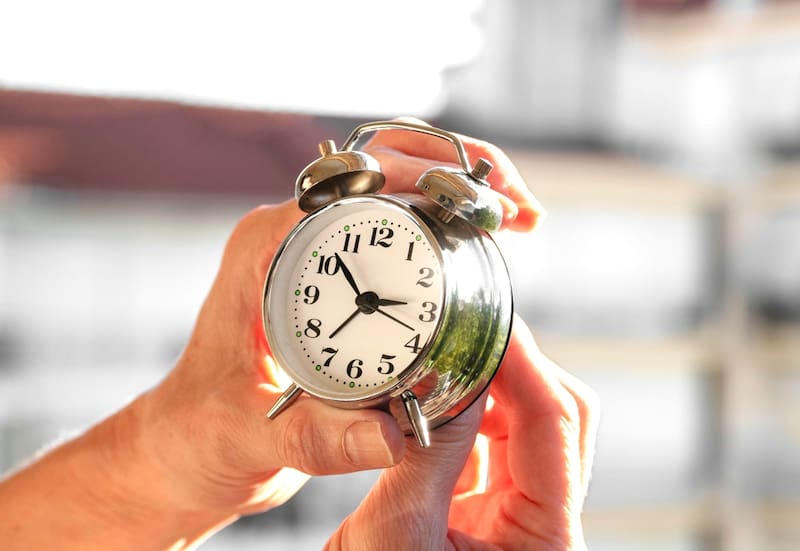
Clocks that do not update automatically must be changed manually. The recommendation is to set them back one hour before going to bed on Saturday, October 31 or make the adjustment during the early hours of Sunday.
The official time in the United States can be checked through NIST, the National Institute of Standards and Technology, which maintains the country’s official time reference system.
Which states do not change the time
Although the change affects much of the U.S. territory, not all states observe daylight saving time.
Hawaii keeps standard time all year round. Most of Arizona also does not move clocks forward or back for the seasonal change. The National Park Service, for example, says that the Grand Canyon area remains on Mountain Standard Time all year round.
For that reason, people living in or traveling between states should keep in mind that the time difference may change starting on November 1, even when one of the regions involved does not make any adjustment.

Why the United States changes the time
The system seeks to make better use of natural light during certain times of the year. During daylight saving time, clocks are set forward one hour relative to standard time; when it ends, they are set back again.
For now, the federal calendar keeps this schedule: daylight saving time begins in March and ends in November. Therefore, the next November 2026 change will follow the current rules for the country.
For those with trips, flights, virtual meetings or scheduled activities between different states, it is advisable to check the local time after the change, especially during the first days of November.