En esta noticia
In Washington a state law remains in force, and it regulates a very common behavior in many parts of the world, whose potential risk is widely underestimated by much of the population, except in extraordinary scenarios such as a pandemic. This rule punishes those who go out sick.
The Revised Code of Washington (RCW) includes all state laws in force to date, including those approved by the legislature as well as those enacted by the current governor. It also includes those approved by voters during elections.
Within this document is RCW 70.54.050: penalty for exposing others to a contagious disease. In Washington, this action is classified as a misdemeanor.

By government decision, these people will be punished one by one: What exactly does the law in Washington say?
According to the RCW: “A person commits a misdemeanor if, voluntarily, they expose themselves in a public place in a way that may infect other people with an infectious disease, unless it is a necessary transfer made without putting the public at risk. A person who has the disease and exposes others without their knowledge also commits a misdemeanor".
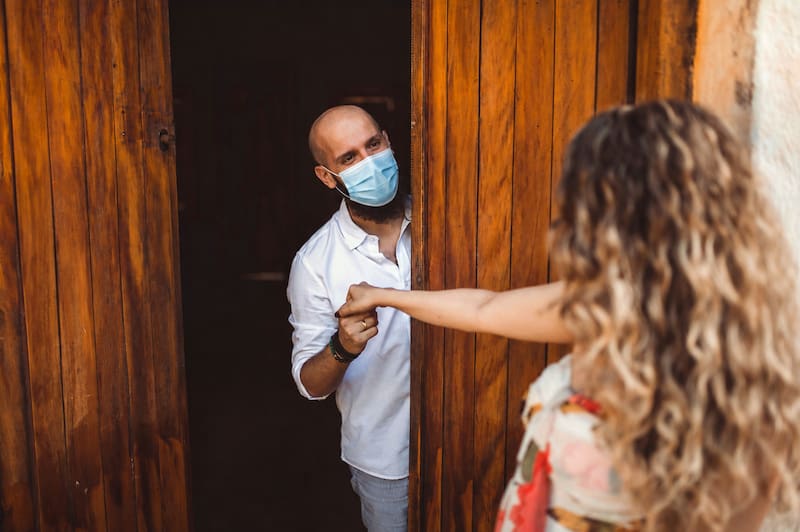
In other words, anyone who knows they are affected by an infectious disease and exposes themselves in public places, putting others at risk, could be penalized. The same applies even if the contact is with only a few people. In this sense, it could also be punishable to invite someone to your home in that condition without warning them of the risk.
They will punish all people who go out into the street sick: What is the penalty applied in each case?
The law does not specify a particular punishment for this offense, so it falls under the general rules scheme. Therefore, according to section 14 of chapter 1 of the Washington Criminal Code, the convicted person may receive a sentence of up to 90 days in jail in a county jail or a fine of up to $250.
It is clear that what is specified above are the maximums, in practice they are not usually applied broadly and are usually reserved for more serious diseases and more specific situations such as not disclosing the presence of HIV before having sex.