En esta noticia
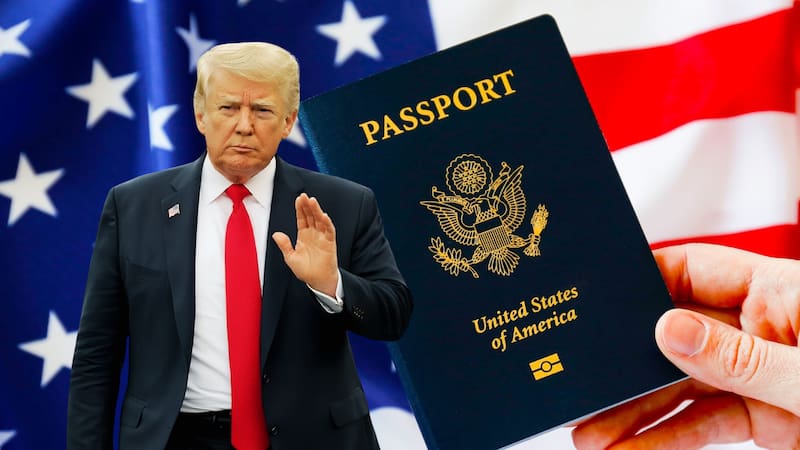
The U.S. Government has legal authority to block, deny, or revoke the passport of any U.S. citizen —whether born or naturalized— who accumulates a seriously delinquent federal tax debt of more than US$62,000.
The Internal Revenue Service (IRS) is legally required to notify the Department of State about these cases, and that agency can act immediately on the document.
The measure is backed by the FAST Act (Fixing America’s Surface Transportation Act) of 2015. It is important to clarify that the rule applies exclusively to U.S. passports: foreigners with passports from another country are not affected by this mechanism, although a significant tax debt can affect their visa or their ability to re-enter the country.

Who is affected by passport seizure due to IRS debts?
For the IRS to notify the Department of State, the debt must meet specific conditions. Not every delay triggers the mechanism.
The tax authority considers a debt to be “seriously delinquent” when it exceeds US$62,000 —including penalties and interest— and at least one of these situations is also met:
- A Notice of Federal Tax Lien was issued for that debt
- All administrative remedies provided for in the Internal Revenue Code (IRC) have been exhausted
- The government issued a levy on the taxpayer’s assets
Once the IRS certifies the debt to the Department of State, that agency is authorized not to issue, not to renew, and to revoke the affected citizen’s passport.
What should taxpayers do to avoid losing their passport?
Those who receive a notice from the Department of State have 90 days to regularize their situation with the IRS. If that deadline passes without an agreement, the passport application is closed and formally denied.
The IRS does not require immediate full payment. During those 90 days, the taxpayer can resolve the problem in three ways:
- Pay the full amount of the tax debt
- Arrange a payment plan with the IRS that is considered satisfactory
- Show that the debt is an error and request its administrative correction
The tax agency stresses that responding to collection notices —even without having the full amount— is key to avoiding harsher penalties. Ignoring the notices is what ultimately leads to the passport being blocked.