En esta noticia
In Little Rock, a city in Arkansas, there are many noises that are prohibited and therefore punished with fines and, in some cases, years in prison. The county has a special section for this type of behavior in its Code of Ordinances.
In the United States, it is common for some cities to have somewhat strict rules regarding behaviors that are often, although they are annoying or irresponsible, common throughout the world.

By government order, everyone who has a vehicle that makes noise will be punished one by one: What does Little Rock law say?
In the Little Rock, Arkansas Code of Ordinances, section 18-52 of article 2, found in subsection B, describes all behaviors related to “Prohibited noises in general” that will be punished by law.
Section B5 prohibits: “The use of any automobile, motorcycle or vehicle that is in such poor condition, so loaded or in such a way that it generates loud and unnecessary noises, such as squeaks, rattles, clatters or other noises.”
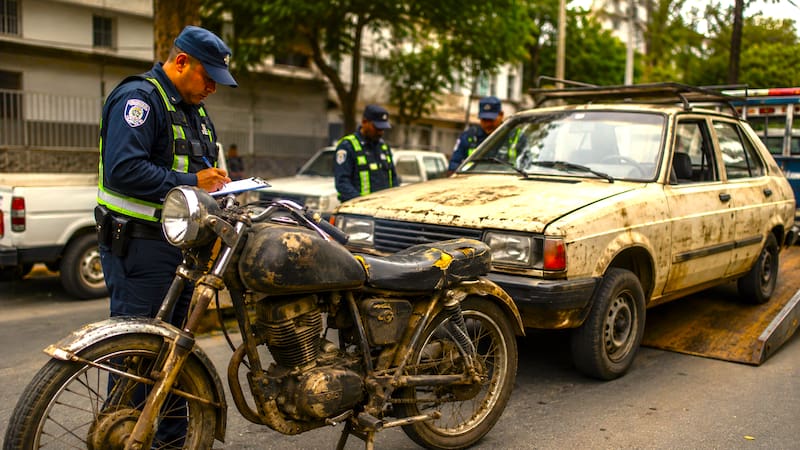
This regulation aims to protect the peace and public order of the city of Little Rock, and it is not the only one that may surprise an outsider. It is also prohibited to play music at certain hours or to keep excessively noisy animals as pets.
What penalties are imposed for this behavior in Arkansas?
People who violate the noise nuisance regulations can face different penalties depending on the severity and repetition of the conduct.
For a first offense, the district court judge has the authority to impose a fine of up to 1,000 dollars for a single incident. If the same offense is repeated, the financial penalty can double and reach 2,000 dollars.

In addition, when the illegal or harmful noise continues over time, authorities can impose an additional fine of up to 500 dollars for each day the violation persists.
Since this is conduct that can be considered a misdemeanor, the court may also order a sentence of up to one year in jail, in addition to the corresponding fine or a combination of both penalties, depending on the severity of the case.