En esta noticia
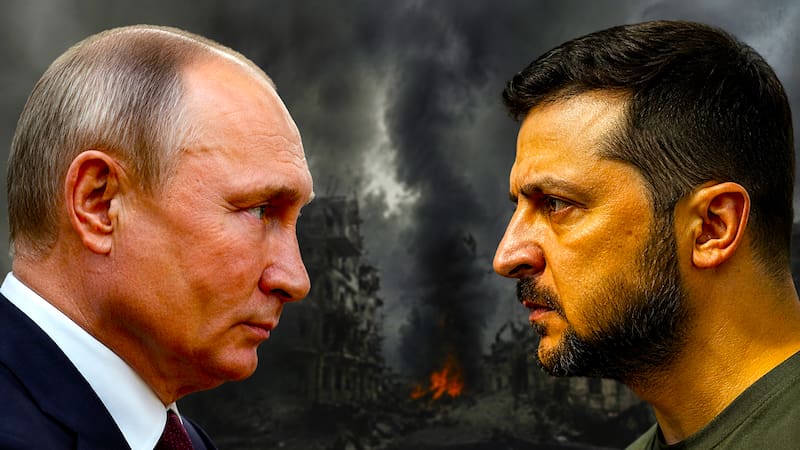
While the Russian head of state, Vladimir Putin, was taking part in the St. Petersburg International Economic Forum, one of the country’s most important business gatherings, Ukrainian President Volodymyr Zelensky published an open letter that caught the attention of the entire world.
In it, the Ukrainian invited the Kremlin to hold direct talks in order to end the war. This initiative came just one day after Ukrainian drones attacked an oil terminal near Moscow.
Zelensky’s proposal: dialogue, a ceasefire, and a face-to-face meeting
“When you led Russia more than 26 years ago, many in Ukraine had a positive attitude toward you. That was the case. That is now a thing of the past.” That is how Zelensky’s public letter to Putin begins. Far from limiting itself to a diplomatic invitation, the letter combines direct criticism of Putin with a concrete proposal to end the conflict.
Zelensky personally holds the Russian leader responsible for the war and maintains that “this war is your personal decision: a war without a real reason. That is how history will remember it.” Throughout the text, he also states that Russian society is beginning to show signs of fatigue with the human and economic costs of a war that is already in its fifth year.
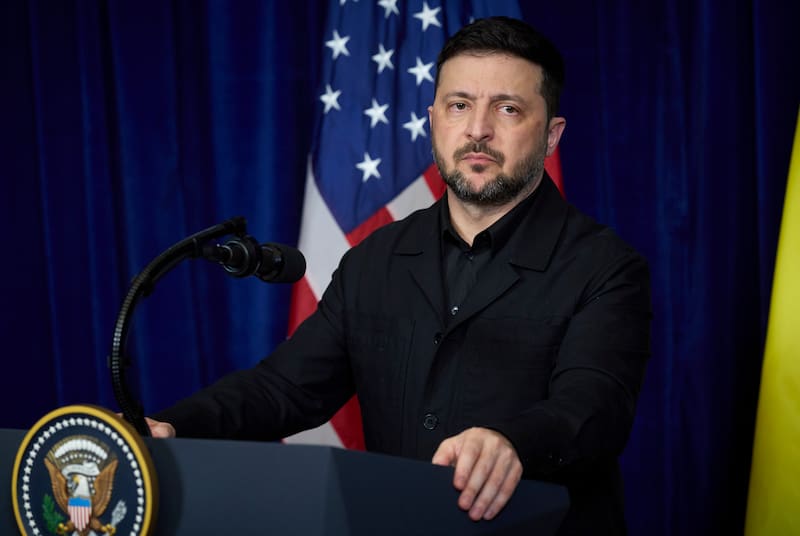
Despite that critical tone, the Ukrainian president insists that there is still a negotiated way out. “Ukraine offers to put an end to this war”, he says, before proposing a direct meeting with Putin in a neutral country. The initiative also calls for a total ceasefire while negotiations last, the exchange of prisoners on the principle of “all for all,” and measures to bring back Ukrainian civilians and children moved to Russian territory.
The letter also contains a message addressed to the United States and other international actors. Zelensky rejects the idea that Ukraine’s future can be defined in negotiations between third countries and warns that “Ukrainian and European problems are not solved in Anchorage.”
Toward the end of the document, he sums up his position in a phrase that functions as a political statement and a condition for any future dialogue: “The front line is now the starting point for diplomacy.”
The chosen moment was no coincidence: drone attacks and a key forum for Russia
The timing of the publication was far from accidental. Zelensky released the letter while the St. Petersburg International Economic Forum was taking place, Russia’s main business gathering, considered by many to be “Russian Davos” and used by the Kremlin to showcase economic stability in the face of Western sanctions.
The publication also came just one day after Ukrainian drones attacked an oil terminal near the city, whose smoke-filled images coincided with the arrival of foreign delegations at the forum, amplifying the symbolic impact of the attack.
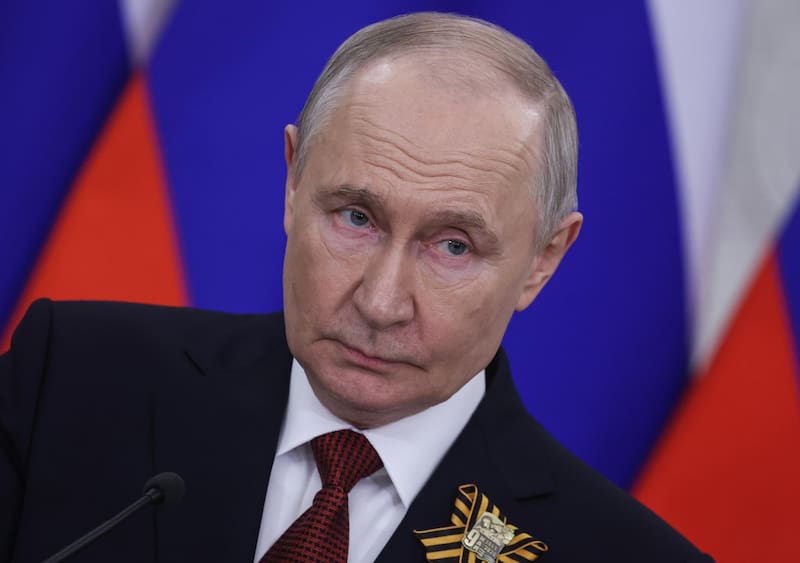
Thus, while Putin sought to project confidence before business leaders and officials, Zelensky seized the international attention to present Ukraine as an actor willing to negotiate, but also capable of sustaining long-range operations on Russian territory.
Why it is believed the real recipient was not Putin
The letter appears to have had a much broader reach than its formal recipient. Although it was addressed to Putin, it also contained messages for different centers of power inside Russia, from business leaders to officials who are concerned about the economic and political costs of a war that has already surpassed four years.
Those tensions were exposed during the forum itself, where some participants defended the need to continue the conflict while others focused on the economic advantages of a negotiated exit.
The letter functioned as more than a diplomatic proposal: it sought to project strength and convey that Ukraine believes it still retains military and political leverage. The combination of recent attacks on Russian territory and the call to negotiate reflects a strategy that seeks to show openness to dialogue without giving up a firm stance toward Moscow.