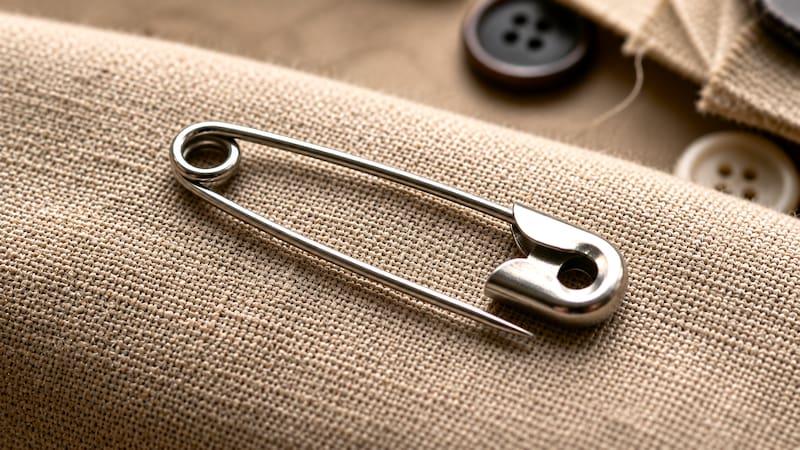
The safety pin is one of those everyday objects that most people use without paying attention to its details. However, its design hides a small element that is fundamental to how it works: a tiny hole located in the spiral of the pin.
Although many believe it is merely an aesthetic feature, this opening serves a key mechanical function that allows the safety pin to open and close properly. In addition, it can have other practical uses that few people know about.


The hole in the clothes pin: What is it for?
Although many people think it is a simple design detail, the small hole located in the spiral of the safety pin performs an essential function for how it works.
In fact, the safety pin has two holes, each with a specific function:
- The upper hole makes it easier for the metal point to enter and exit the clasp with less effort and reduces the pressure needed to open and close the safety pin.
- The hole located in the spiral serves as the anchor point for the spring. There, the wire hooks onto itself, creating the tension needed for the safety pin to close again automatically and keep the garment securely fastened.
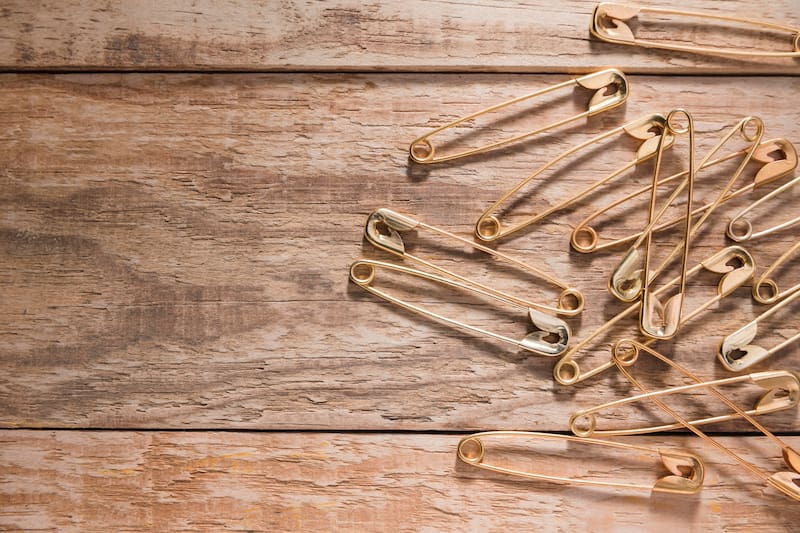
Without these holes, the safety pin would lose the spring effect that characterizes it and would not be able to keep clothing securely closed.
Why is it important?
In addition to being key to the closing mechanism, the hole in the safety pin also has other practical uses.
Among them:
- It maintains spring tension, allowing the safety pin to return to its original position after being opened.
- It increases safety, since it keeps the point from easily slipping out of the clasp.
- It makes organization easier in sewing and embroidery, because it allows several safety pins to be passed through a ring or cord to keep them neatly arranged.
- It can be used as a makeshift needle in an emergency, by passing a thread through the hole to make a temporary stitch.