En esta noticia
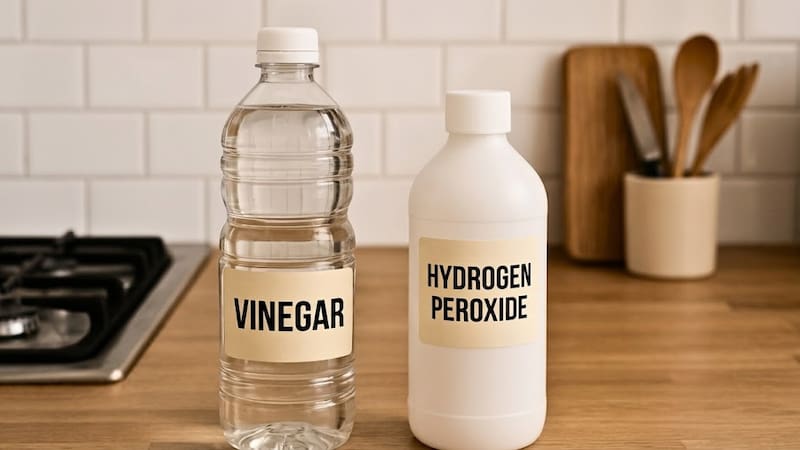
In the realm of home tricks, a combination known for its effectiveness and affordability has become considerably popular: the mixture of hydrogen peroxide and white vinegar.
These two products, which almost everyone has in their homes, can, when used properly, leave any surface clean, disinfected, and shiny without resorting to harsh chemical products.
Why vinegar and hydrogen peroxide are ideal allies.
The secret of this natural formula lies in the unique properties of each component. White vinegar acts as a natural acid with antibacterial and degreasing capacity, making it ideal for removing dirt and bad odors.
For its part, hydrogen peroxide acts as a disinfectant, whitener, and agent that eliminates fungi and bacteria.
When combined, always avoiding mixing them in the same container, these elements give rise to an efficient and eco-friendly cleaning method that a growing number of people are incorporating into their daily routine.
How to use vinegar and hydrogen peroxide for household cleaning
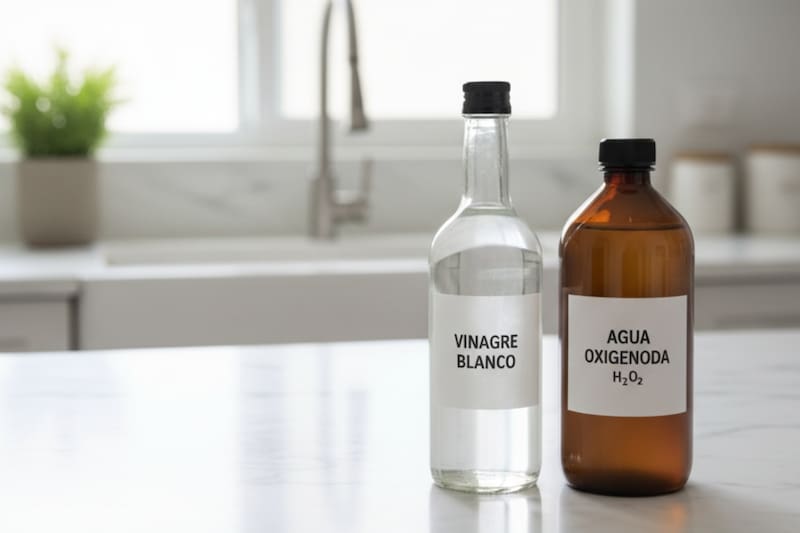
Cleaning specialists advise not to mix them directly, as they may lose effectiveness. The best approach is to apply them one after the other on the surface to be cleaned: first the vinegar and then the hydrogen peroxide.
These are some of the most effective uses of this technique:
- Disinfect surfaces: apply vinegar and then hydrogen peroxide on countertops, bathrooms and kitchen boards. The result is a deep cleaning that eliminates bacteria and germs.
- Remove bad odors: ideal for refrigerators or microwaves, as it neutralizes odors and leaves a fresh scent.
- Wash fruits and vegetables: this combination helps to reduce pesticide residues and microorganisms, ensuring safe cleaning.
- Whiten white clothes: add vinegar during washing and hydrogen peroxide in the rinse. Garments come out brighter and stain-free.
- Disinfect sponges and cloths: alternate both ingredients to eliminate bacteria and extend the useful life of your cleaning items.
Essential precautions to ensure the safe use of the mixture
Although both products are natural and eco-friendly, specialists suggest some important recommendations:
- Do not mix them in the same bottle, since they could generate unstable compounds.
- Use these products in well-ventilated spaces.
- Test on a small area if they are applied to delicate materials.