En esta noticia
- The cabinets stayed, but the kitchen looks completely different
- The color change made the biggest difference
- New hardware helped complete the transformation
- Lighter surfaces changed the entire room
- The curved peninsula was kept
- Why painting cabinets can be an alternative to replacing them
- The before-and-after shows what paint can accomplish
Replacing an entire kitchen can be one of the most expensive home improvement projects, but one recent makeover shows how dramatically a space can change without tearing out the existing cabinets.
A kitchen filled with oak cabinetry was given a completely different look after the cabinets were professionally sprayed in a deep blue shade. The transformation kept much of the original layout intact while changing the color, hardware and surrounding finishes.
The result is a kitchen that looks almost unrecognizable compared with its original appearance.

The cabinets stayed, but the kitchen looks completely different
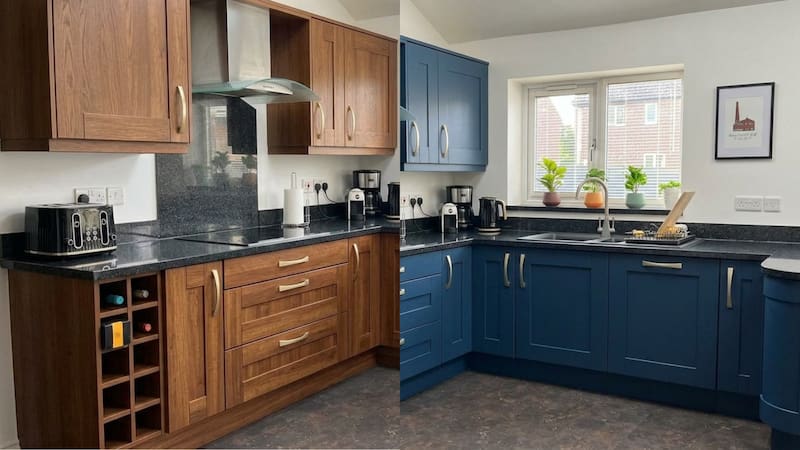
The original kitchen featured extensive oak cabinetry running around the cooking and sink areas, along with tall storage surrounding the appliances.
Instead of removing those cabinets, the makeover focused on preparing and repainting the existing doors, drawer fronts and frames.
The doors were taken off and sanded before being sprayed with Stiffkey Blue, a deep blue shade from Farrow & Ball. The preparation helped create a consistent finish while preserving the original Shaker-style profiles.
This approach allowed the homeowners to keep the existing storage and layout while giving the room a much more contemporary appearance.
The color change made the biggest difference
The oak finish originally dominated much of the room, creating a combination of brown cabinetry, dark countertops and dark flooring.
Once the cabinets were painted blue, the visual effect changed dramatically.
The new matte finish created a continuous color across the upper and lower cabinets, including the cabinetry surrounding the appliances and the curved peninsula.
Rather than looking like individual pieces of oak furniture, the cabinets now appear to form one cohesive design element throughout the kitchen.
New hardware helped complete the transformation
The makeover did not stop with the paint.
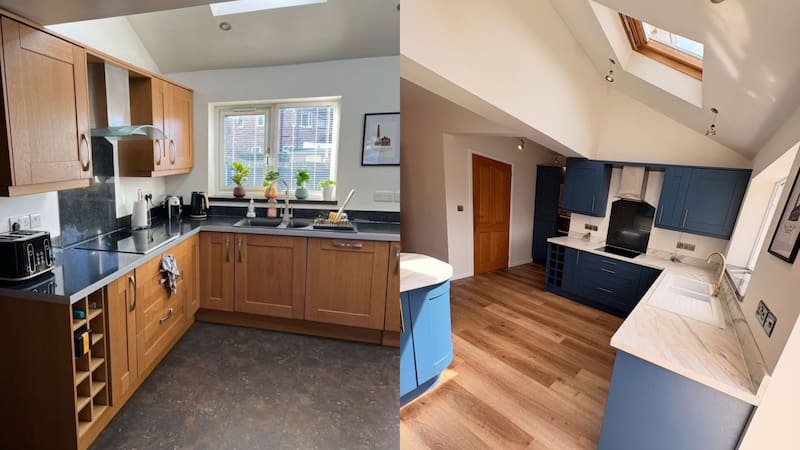
The original silver handles were replaced with pale gold hardware, creating a noticeable contrast against the dark blue cabinets.
The change may seem relatively small, but new cabinet handles can have a significant effect on the overall appearance of a kitchen. In this case, the gold hardware adds another decorative element without requiring the cabinets themselves to be replaced.
The existing appliance configuration was also preserved, including the microwave, double oven and surrounding storage.
Lighter surfaces changed the entire room
Another important part of the transformation was the introduction of lighter finishes.
The original black countertops were replaced with light marble-look worktops, while the darker flooring was replaced with a lighter wood-look surface.
Those changes helped balance the deep blue cabinetry.
The combination of blue cabinets, pale countertops and lighter flooring also allows natural light from the windows and skylights to play a larger role in the room.
As a result, the kitchen feels visually lighter despite the use of a dark cabinet color.

The curved peninsula was kept
One of the more distinctive elements of the original kitchen was a curved peninsula extending from one of the cabinet runs.
Rather than removing it, the makeover incorporated the curved section into the new design by painting its doors, side panels and base in the same Stiffkey Blue finish.
The countertop follows the curved shape, while the gold hardware matches the rest of the kitchen.
Keeping this feature helped preserve the original character of the room while making it feel more cohesive with the new design.
Why painting cabinets can be an alternative to replacing them
The makeover illustrates why painting existing kitchen cabinets has become an attractive option for homeowners who want a major visual change without completely rebuilding their kitchen.
Cabinet replacement can involve removing fitted storage, altering appliance openings and changing the entire layout.
Painting, by comparison, can preserve the existing configuration while focusing the renovation budget on surfaces, preparation, hardware and other visible details.
However, the process is more involved than simply applying a coat of paint. The doors need to be removed, surfaces properly prepared and surrounding areas carefully protected from overspray. In this project, plastic and masking materials were used to protect countertops, appliances, cabinet interiors and flooring.
The before-and-after shows what paint can accomplish
Perhaps the most surprising part of the makeover is how much of the original kitchen remains.
The appliances are still in the same locations. The cabinet layout remains recognizable. The storage areas and curved peninsula were retained.
What changed was the visual language of the room. The oak became deep blue, silver hardware became pale gold, dark countertops became lighter and the flooring also shifted to a brighter finish.
Together, those relatively targeted changes created the impression of an entirely new kitchen without completely replacing the existing cabinetry.
For homeowners with solid cabinets that are still in good condition, the project offers a useful reminder: sometimes a dramatic kitchen transformation can begin with paint rather than demolition.