En esta noticia
Dull knives represent a danger in the kitchen: they require more force, slip easily, and increase the chances of accidental cuts.
They also ruin the presentation of food because they create uneven cuts. Keeping them sharp is key to cooking safely and conveniently.
Given the difficulty of accessing a professional service or buying a sharpener, there is a homemade and economical resource. It is a quick method that uses aluminum foil to restore the edge and avoid accidents at home.

How to sharpen a knife at home with aluminum foil
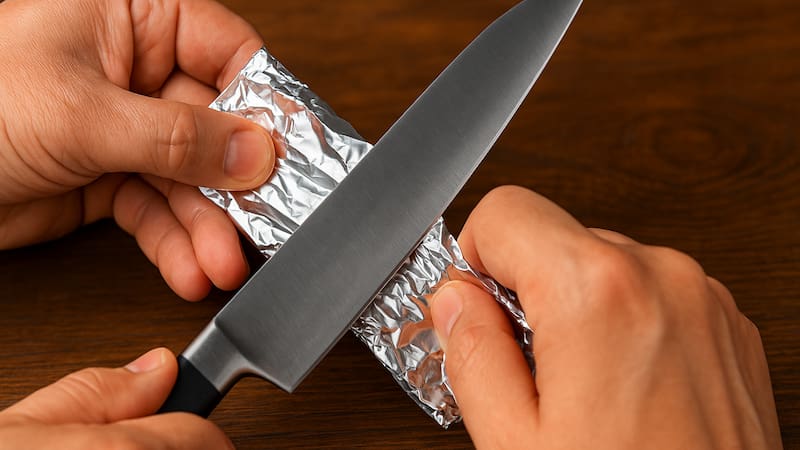
Aluminum foil works as an improvised abrasive surface that helps improve the knife’s edge. Although it does not replace a professional sharpener, it can get you out of trouble in minutes.
Step by step to use aluminum foil as a sharpener:
- Cut a piece of aluminum foil about 25 to 30 cm long.
- Fold it several times until you get a thick, sturdy strip.
- Make sure the knife is clean and dry.
- Place the blade at a angle of about 20° relative to the foil.
- Slide the blade along the foil, applying light pressure.
- Repeat several times on both sides of the blade.
- Wash the knife well when finished to remove any metallic residue.
Important information
It is important to alternate sides to keep an even edge and not apply too much force, since the aluminum can wear down and release particles that must be cleaned off before using the knife on food.
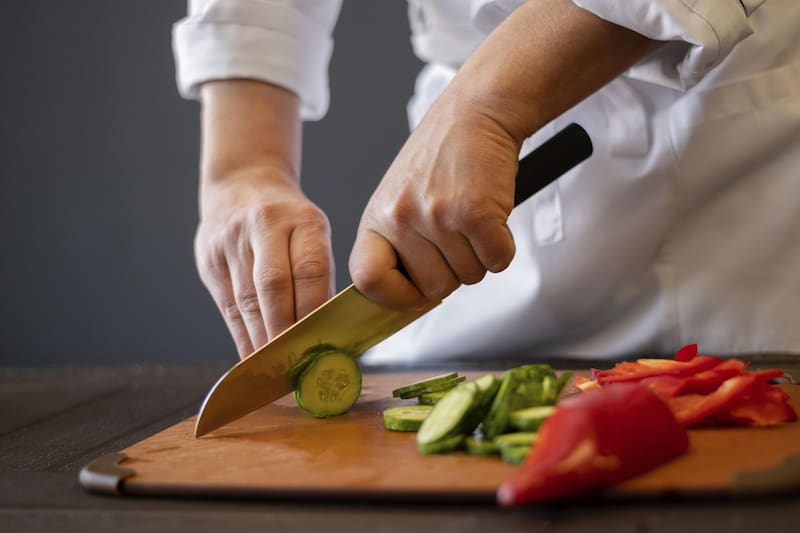
How safe is it to use aluminum foil to sharpen your knives?
The homemade method using aluminum is practical, but it has limitations. Since it is a soft material, it does not achieve the same precision as a sharpening stone or a specialized sharpener, and it can wear out quickly. That is why it is recommended as a temporary solution.
Safer alternatives
For more effective and long-lasting results, experts recommend using:
- Sharpening stones with different grits to achieve precision.
- Honing steel or steel rod, ideal for maintaining the edge between sharpening sessions.
- Manual or electric sharpeners, specifically designed for knives.
These tools provide a uniform result, extend the lifespan of knives and reduce risks in the kitchen.