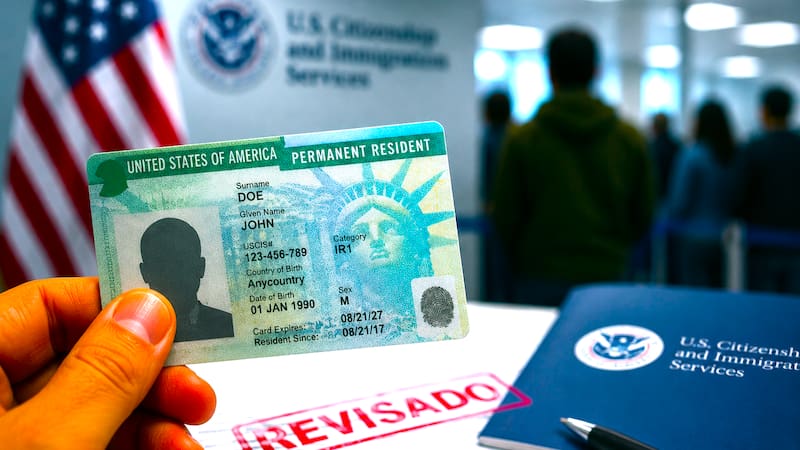

En esta noticia
In the United States, the wave of immigration policies promoted by the administration of Donald Trump since he returned to power continues to grow. In its most recent directive, it demanded that most holders of temporary visas and beneficiaries of humanitarian permits return to their country of origin to wait for their permanent residence permit (Green Card).
Although weeks later, after Memorial Day the Government began to downplay it. In fact, the Department of Homeland Security (DHS) stated that it was not a broad policy.
Permanent residence in the United States: the Government will block Green Cards, one by one, for people who commit this mistake
The Government established that those who make any of the following mistakes could lose the possibility of obtaining a Green Card or put the one they already have at risk of becoming invalid:
- Committing offenses that the law considers deportable
- Remaining outside the United States for extended periods of time (more than one year without reentry permission)
- Filing taxes incorrectly or submitting returns late
- Obtaining permanent residence with fraudulent information or documentation
New immigration policies: Who can be denied a Green Card?
According to the memo issued by the Government, most people who are temporarily in the country and want to obtain the Green Card will no longer be able to complete the process this way.
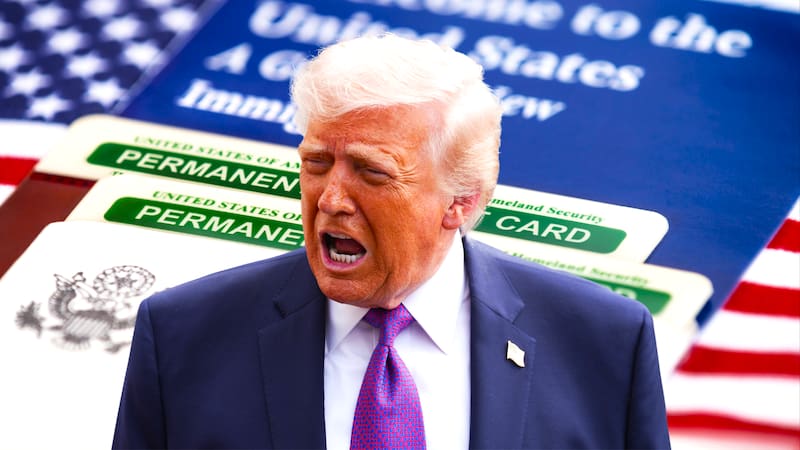
Now, they will have to return to their country of origin and submit the application at a U.S. embassy or consulate. This new measure limits the use of the procedure that thousands of foreigners used to change their immigration status without needing to leave the country.

Important information about the Green Card: documentation, processing times, and latest updates
Below is what everyone needs to know about the Permanent Residence Permit:
Basic documentation that must be provided
- Valid passport.
- Birth certificate.
- Proof of legal entry into the United States.
- Relevant immigration forms.
- Marriage or relationship certificates, when the application is based on family ties.
- Work evidence, if it is a Green Card based on employment.
- Criminal record and additional documentation are requested during the process.
Processing times
Delays can extend for months or even years, depending on the immigration category. In this regard, consular processes face significant delays in some countries.
Additionally, waiting lists depend on the annual availability of visas and the applicant’s nationality.
Latest updates
The Government announced in May 2026 a more restrictive interpretation for certain adjustment of status applications within the United States. The executive branch maintains that obtaining permanent residence from U.S. territory should be considered a discretionary benefit and not an automatic one.