En esta noticia
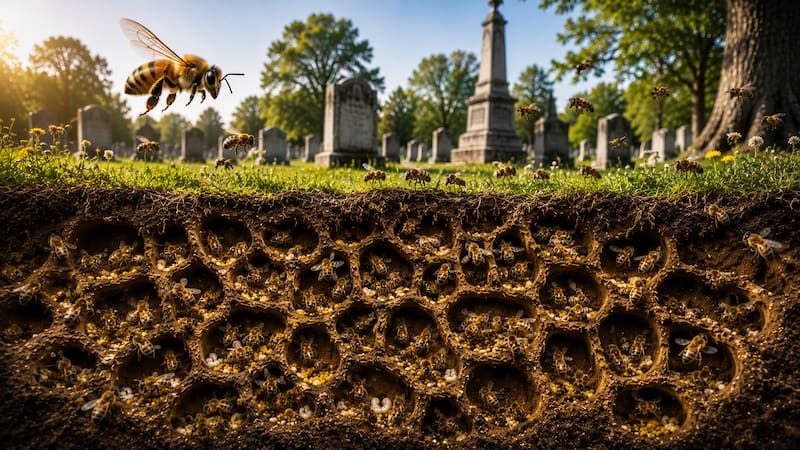
Researchers from Cornell University discovered 5.5 million mining bees beneath East Lawn Cemetery in Ithaca, New York. The find is considered one of the most significant in the study of native pollinators in recent years.
The aggregation occupies 1.5 acres below the surface and could have been there for more than a century. Scientists believe the site offers clues to protecting a key species threatened by habitat loss, pesticides, and climate change.
What did Cornell scientists discover beneath the New York cemetery?
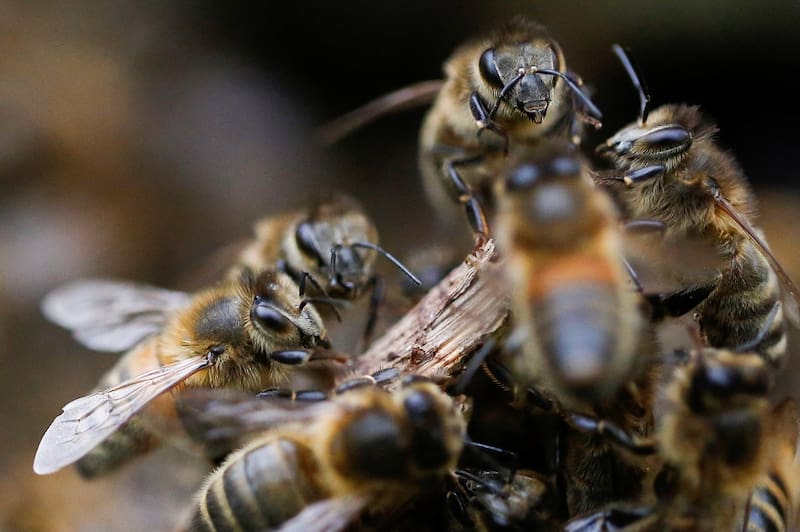
The common mining bee (Andrena regularis) is a native species that nests individually underground: each female digs her own tunnel, with no queen or hive. Researchers estimate that the aggregation is equivalent to between 140 and 200 honeybee hives.
Historical records indicate that Andrena regularis was documented at East Lawn more than 100 years ago. The cemetery offers ideal conditions: stable, well-drained soil, minimal exposure to pesticides, and little human intervention.
Why the cemetery turned out to be an ideal refuge
- Well-drained soil that is easy to dig
- Minimal exposure to pesticides
- Terrain stability across generations
- Little human intervention over decades
How could this discovery help save native pollinators?
The cemetery borders Cornell’s orchards, where these bees emerge each spring. They are highly efficient pollinators: active in low temperatures and more effective than other species at transferring pollen.
The scientists will continue studying the aggregation to understand how it remained stable for a century. The goal is to replicate those conditions in other areas and reverse the global decline of pollinators.
What threatens ground-nesting bees
- Urbanization and intensive agriculture
- Use of pesticides in nesting areas
- Paving or altering the terrain
- Climate change and shifts in flowering cycles