En esta noticia
After several consecutive solar eruptions, one of the most striking events of June will reach the planet. Finally, the particles will reach Earth’s magnetic field and will produce the lights everyone hopes to see.
Auroras borealis are usually concentrated and more visible in regions within the Arctic Circle, but on this occasion they will be seen much farther south because of the intensity of the geomagnetic storm.
The astronomical phenomenon of the year is arriving: How do auroras borealis appear?
It all starts with solar eruptions, which expel several Coronal Mass Ejections (CME): enormous clouds of plasma and charged particles with solar energy that travel through space at millions of km/h. When these particles reach Earth’s magnetic field, so-called geomagnetic storms occur, which are reflected in the sky as auroras borealis.
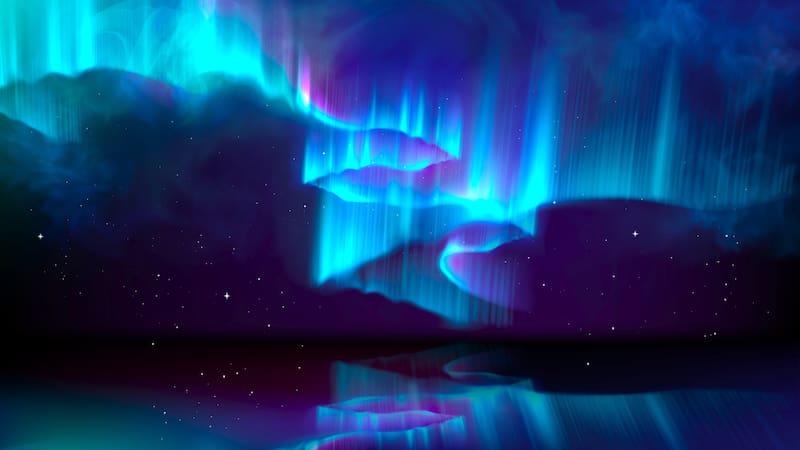
The storm forecast for this week could reach levels sufficient for auroras borealis to be seen much farther south than usual, because the more intense the interaction between solar particles and Earth’s magnetosphere, the greater the geographic reach of these lights.
The intensity of the spectacle will depend largely on the speed of the solar ejections, the orientation of the magnetic field carried by the particles, the exact moment they impact Earth, and the duration of the geomagnetic storm.
It will light up the sky this week and will be the most anticipated show of all: From which states will it be visible?
The special thing about when these kinds of geomagnetic storms occur with more intensity than usual is that the phenomenon can move several km south.
From the United States, the best locations to see it are:
- North Dakota
- South Dakota
- Minnesota
- Wisconsin
If the intensity reaches record levels, it could also be seen well in:
- Iowa
- Nebraska
- Illinois
- Indiana
- Ohio
- Pennsylvania
- New York

Recommended conditions for observing this astronomical phenomenon
It is recommended to look for places far from large cities to reduce light pollution, since artificial lights make it harder to observe the auroras borealis.
They also suggest choosing sites with a clear view toward the northern horizon and checking in advance that weather conditions allow a cloud-free sky.
In addition, they advise following updates to geomagnetic forecasts, since the intensity of the solar storm can change even a few hours before the event.