En esta noticia
The Internal Revenue Service (IRS) of the United States has established a protocol aimed at keeping taxpayers informed about the repercussions that noncompliance with their tax obligations could have in relation to their passports.
According to the regulations set forth, the Fixing America’s Surface Transportation Act (FAST) of 2015 requires the IRS to inform the Department of State about the status of those taxpayers who have specific debts, which could result in severe penalties linked to this immigration document.

The tax agency emphasizes the importance of responding to collection notices, even in situations where there is not enough money to pay the outstanding obligation in full. In such cases, it is essential to devise a joint plan that allows minimizing the penalties that will be applied for not settling the outstanding amount on time.
The Government is authorized to revoke the passport of those who maintain these debts
The IRS warns: “If you are individually responsible for a tax debt of more than USD 62,000 and do not pay the amount you owe or make alternative arrangements to pay, we may notify the Department of State that your tax debt is seriously delinquent."

This type of notice refers to the unfinished obligation to pay a federal tax - along with its penalties and interest - on which the government is already in a position to make a claim. The debt must be greater than USD 62,000, and a Notice of Federal Tax Lien must have been filed, as well as all administrative remedies under the Internal Revenue Code (IRC) exhausted or a levy issued.
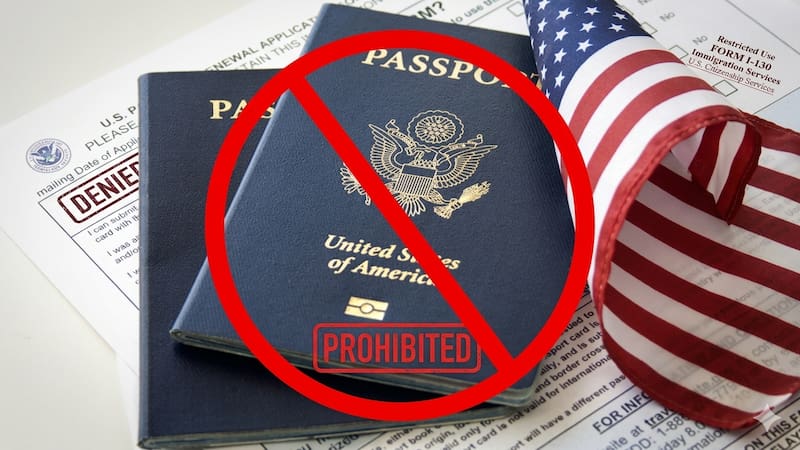
It is essential to keep in mind that, as a general rule, the Department of State will not issue or renew and may also revoke the passports of those taxpayers who have been classified as debtors of these obligations.
The revenue agency is responsible for informing the Department of State about all taxpayers who have been classified as holders of a “seriously delinquent tax debt”.
Step-by-step guide: this is how the passport is processed for these taxpayers
The IRS explains that if a taxpayer with a debt of this type wants to apply for a passport or tries to renew theirs, the application they submit will be held for a period of 90 days from the moment the Department of State notifies them of this action.
“If the taxpayer does not make satisfactory payment arrangements with the IRS within 90 days of the date of the Department of State’s denial letter, the taxpayer’s passport application will be denied and closed by the Department of State,” the IRS states.
During this time period, it will be necessary for the person to reach a payment agreement with the IRS, pay off the full amount of their tax debt, or resolve any issue if it is a mistake.